Monday, November 5, 2018

Review of A House of Ghosts by W.C. Ryan (Zaffre, 2018)

Winter, 1917. Lord Highmount, a weapons manufacturer has organized a gathering at Blackwater Abbey, his home on a Devonshire island, to try and make contact with his two sons killed in the trenches. Present are his wife and daughter, two spiritualists, a doctor and his patient who is suffering from shell-shock, his industrialist friend and his wife who have a son missing in action, an officer who works in the Ordnance Dept, and the abbey’s servants. Asked to attend by British intelligence are Captain Donovan, chaser and fixer of spies, and Kate Cartwright, daughter of the guest industrialist and former fiancée to the officer, who works in Naval codes and is also able to see ghosts. They’re job is to try and identify who has been passing on secret military intelligence to the Germans. Not long after the guests arrive a storm closes in cutting the island off and strange and sinister occurrences start to happen leading to murder. Donovan and Kate struggle to make sense of the unfolding events, especially since they seem to be chasing ghosts.

In A House of Ghosts Ryan mashes together elements of a golden age country house crime tale, a ghost story, and an espionage thriller. Using a classic setup, he isolates his characters in a house on an island, using the weather as means to trap them there. The house is an old abbey and is haunted by centuries worth of inhabitants, is riddled with secret passages, and has its upstairs-downstairs politics of servants and owners/guests. Among the guests are two spiritualists, a doctor whose shell-shocked patient can converse with the dead, and a woman who can see ghosts. They are there to conduct a séance and talk to their relatives killed in the trenches. One of the guests is also a German agent and two have been sent to capture the spy. The guests are all friends of the host Lord Highmount and have various interconnections, and the servants have their own agendas and linkages. The two main protagonists are Captain Donovan, an Irishman working for British intelligence, and Kate Cartwright, who is to aid him winkle out the spy. Two likeable characters, they immediately form a bond that extends beyond a working relationship. Ryan uses the set-up to good effect, with skulduggery mixing with ghostly happenings, and friends starting to turn on each other. The result is a story that rattles along, with plenty of intrigue and action. I was expecting it to be a bit more creepy and haunting and the identity of the spy master is no great mystery. However, the other happenings are not quite so clear, keeping the reader guessing about some elements of the tale. I imagine this is opening of a series featuring Donovan and Kate, or at least I’m hoping it is. Overall, an engaging, entertaining tale that harks back to the golden age of crime fiction.

Sunday, November 4, 2018

Lazy Sunday Service

In anticipation of a trip to Taiwan I've been trying to track down some crime fiction set there. I've managed to order Ghost Month by Ed Lin and Taroko Gorge by Jacob Ritari. If anyone has any other recommendations for Taiwan-based tales, then I'd be grateful to hear about them.

Posts this week:
Review of Rain Falls on Everyone by Clár Ni Chonghaile
October reads
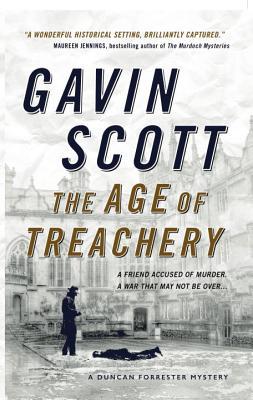
Review of The Age of Treachery by Gavin Scott
Scratch

Saturday, November 3, 2018

Scratch

Kathleen drew a key across the bonnet, gouging the paint.

‘Are you crazy?’ Emily tried to pull her away.

‘He’s feckin’ two-timing me.’ Kathleen shrugged off her friend; scratched again.

‘He’ll kill you, you daft bitch.’

‘Fuck him.’ A heel folded under her ankle and she fell to one side.

‘Jesus. You’re wasted.’ Emily tried to drag her up.

‘Fucker!’ The stone thumped into the headlight; the car alarm wailed.

‘Kathy!’

‘Fucker.’ She tried to stand, tears ruining her mascara.

‘Come-on, let’s go.’

They fled arm-in-arm.

Behind them Ryan shouted: ‘Fucking bitch!’

‘Next time I’ll scratch your fucking eyes out!’


A drabble is a story of exactly 100 words.

Friday, November 2, 2018

Review of Rain Falls on Everyone by Clár Ni Chonghaile (2017, Legend Press)

Rescued by an Irish aid worker, Theo arrived in Ireland from Rwanda aged seven. Aged twenty two and with an engineering degree, the financial crisis means he cannot find suitable work. Instead he takes up a job working in a restaurant kitchen and sells drugs for a criminal gang. At the restaurant he meets Deirdre, a middle-aged woman with three kids, and the pair form an unlikely friendship. Both are struggling to make a place in the world they are happy with. Theo is haunted by his childhood memories and is looking for a way out of the drugs trade. Deirdre wants an end to her domestic abuse but is too afraid and resigned to leave. When Theo’s friend Neville, the boyfriend of Deirdre’s daughter, Grace, is given a punishment beating by the criminal gang that Theo deals for, it provides the catalyst for change. But change comes with a heavy cost that neither is sure they want to pay.

Rain really does fall on everyone in Clár Ni Chonghaile’s tale of identity and belonging in situations of violence. Set in Dublin, the tale focuses on the life of Theo, a young man bought up in Dublin after being rescued from the Rwandan genocide, and his friendship with Deirdre, a middle-aged woman living with domestic abuse. Theo is somewhat of a lost soul who finds solace in the Irish language and poetry and deals drugs for a criminal gang to get by. Deirdre has resigned herself to living with the violence of her husband. Their lives become intricately interwoven through two key events centred on Theo’s best friend, Neville, that forces them both to confront their past and their future. Ni Chonghaile’s tale is a carefully crafted slice of social realism. It is shot through with empathy and pathos, but it is not for the faint-hearted with its scenes and discussion of domestic abuse, genocide, gang violence, suicide, and racism. These are not glorified, but rather form an everyday backdrop to ordinary people living difficult lives. The characterisation, character development across the story, social interactions and sense of place are excellent, and the whole tale has a deep-sense of believability to it. I can’t say it was a joyous or entertaining read, but it was certainly engaging, thought-provoking and compelling.


Wednesday, October 31, 2018

October reads

A varied month of reading, with one stand out book: She Rides Shotgun by Jordan Harper.

The Age of Treachery by Gavin Scott ***
The Falcon and the Snowman by Robert Lindsey ****
Jar of Hearts by Jennifer Hillier ****.5
Under the Frangipani by Mia Couto ***
The Innocent by Ian McEwan ****
Wife of the Gods by Kwei Quartey ***.5
Code Girls by Liza Mundy ****.5
She Rides Shotgun by Jordan Harper *****
The Cypher Bureau by Eilidh McGinness ***
Basin and Range by John McPhee ****
The One Man by Andrew Gross ****.5

Tuesday, October 30, 2018

Review of The Age of Treachery by Gavin Scott (Titan Books, 2016)


Winter, 1946. Duncan Forrester has resumed his career as a historian at an Oxford College after spending the war working for SOE in occupied Europe. The wife of his best friend is having an affair with a fellow don. When the don is found dead, supposedly stabbed and thrown from the rooms of the cuckolded husband, he is accused of murder. Forrester is convinced his friend is innocent and is determined to proof it. On the night of the murder, his college was hosting a dinner with a number of guests, including a German professor of literature and a Norwegian scholar of sagas. Forrester is convinced that there might be some connection, and this suspicion is heightened when he is attacked himself. The police, however, are uninterested, convinced they have the right man, leaving Forrester to draw on his war-time skills and contacts, travelling to London, Berlin, Denmark and Norway and tangle with dark forces in order to reveal the real killer.

The Age of Treachery is the first book in the Duncan Forrester series that follows the exploits of ex-SOE agent turned historian. In this initial outing, Forrester has returned to academic life as a junior fellow at an Oxford College. When his best friend is accused of murdering a fellow don who was having an affair with his wife, Forrester sets out to find the real killer, slowly uncovering a war-time conspiracy that some are willing to kill for to keep secret. The story is written as a kind of ‘Boys’ Own’ tale of adventure, with Forrester drawing on his historian skills to uncover evidence and his SOE-skills to stay alive as dark forces try to stop his quest. Dropped into the tale are before-they-were-famous cameos by real-life people such as Robert Maxwell, Margaret Thatcher, and Kenneth Tynan. If one treats the story as a Boys’ Own take it’s reasonably engaging and entertaining, despite being somewhat thin and unbelievable throughout. That said, it would have worked more effectively if the identity of the killer wasn’t telegraphed from a very long way out and the solution to the ‘locked room’ element of the murder – that none of a room’s occupants can easily get to the site of the killing – wasn’t ridiculous.


Sunday, October 28, 2018

Lazy Sunday Service

I finally got another book in the post this week - The Right to the Smart City - co-edited with Paolo Cardullo and Cesare di Feliciantonio. I also published the intro and conclusion chapters as working papers (links below). I think it's an interesting set of essays and hopefully it'll pass smoothly through the production process. In reading terms, I've slowly been working my way through Rain Falls on Everyone, a socially realist portrayal of the struggles of a young Rwandan man in Dublin.


My posts this week
Review of The Falcon and the Snowman by Robert Lindsey
New paper: Towards a genuinely humanizing smart urbanism

Review of Jar of Hearts by Jennifer Hillier
New paper: Citizenship, Justice and the Right to the Smart City
Why won’t they leave me alone?

Saturday, October 27, 2018

Why won’t they leave me alone?

‘Why won’t they leave me alone?’

‘You know why; that video’s gone viral.’

‘But I never asked for it! I don’t even know who took it.’

‘You were being sexually harassed, Sarah. That creep’s life is hell now.’

‘And so is mine. Have you seen the abuse I’m getting on twitter? I was called a whore by a complete stranger yesterday.’

‘Another creep.’

‘A middle-aged woman. Why can’t people mind their own business?’

‘He was attacking you.’

‘And now it’s a global headline. And they’re judging me as much as him!’

‘It’ll soon be yesterday’s news.’

‘But not for me.’


A drabble is a story of exactly 100 words.

Friday, October 26, 2018

Review of The Falcon and the Snowman by Robert Lindsey (1979, Simon and Schuster)


Christopher John Boyce and Andrew Daulton Lee grew up in wealthy, upper middle-class homes in Southern California in the 1950s and 60s. Friends from an early age, they’d been altar boys together and shared an interest in falconry. Both started to dabble in drugs in high school and both were listless, unsure of what they would do after school, trying and dropping out of college. While Lee gravitated from selling drugs in school to forming his own drugs network, making runs to Mexico and regularly in trouble with the law, Boyce got work in a defence contractor through a contact of his father where, aged twenty one, he quickly graduated to handling highly classified spy satellite plans and international CIA communications. Disillusioned with America’s foreign policy and domestic politics in the early 1970s, Boyce decided to express his discontent by passing on secrets to the Soviets. Lee’s role was to act as a courier, taking copies of documents to the Soviet embassy in Mexico City where he was to sell the information. For Lee, the new line in finance offered the opportunity to expand his drugs enterprise. The two passed highly secret information for a couple of years before being caught, kind of by accident. Tried separately, they were both given long sentences for treason.

Lindsey’s book tells the story of Boyce and Lee’s lives and enterprise from childhood up to the end of the court case, exploring why two boys of privilege, whose fathers’ had served in the military or intelligence services, betrayed their country. Published not long after the court case, it is packed full of detailed information, cobbled together from various sources, including the trial, and extensive interviews with the protagonists. Since both Boyce and Lee were serial liars, and both tried to blame and frame the other for their enterprise, there’s always a sense that the account is Lindsey’s best attempt at untangling a muddled and contradictory set of stories. Nonetheless, it’s a comprehensive and engaging read about two young, opportunistic men who took advantage of circumstance, for different motivations, to commit treason. After finishing the book I decided to see what happened to the two men to find that Lindsey went on to write a second book about Boyce, who managed to escape from prison in 1980 and went on to commit 17 armed robberies before being recaptured; something I would have expected from Lee but not Boyce given their respective portrayals in The Falcon and the Snowman.


Tuesday, October 23, 2018

Review of Jar of Hearts by Jennifer Hillier (Atlantic, 2018)

When she was sixteen years old, Georgina Shaw – known as Geo – dated Calvin James, five years her senior. After a drunken party, Geo’s best friend and leader of the school cheerleading team, Angela Wong, disappeared. Fourteen years later, Angela’s remains are found in woods near to Geo’s old home and she and Calvin are arrested. He for Angela’s murder and the deaths of three other women, Geo for aiding and abetting in the death of her friend. The arresting officer is Kaiser Brody, a close school friend who she subsequently shut out of her life. An executive in a pharmaceutical company and on the verge of marriage, Geo’s live is upended and she’s given a five year prison sentence. Not long after being sent to prison, Calvin escapes and disappears. As Geo nears release, a fresh set of new bodies start to be found. While Kaiser hunts for Calvin, Geo is prepared to take her chances and confront her past.

Jar of Hearts takes place near to Seattle and is a spin on the serial killer genre. The tale centres on Geo (Georgina) Shaw, who at the start of the tale is convicted of aiding and abetting in the death of her best friend, Angela Wong, by her then boyfriend, Calvin James, fourteen years previously. Calvin subsequently went on to murder three other women. Geo, an executive at a major pharmaceuticals company, is sent to prison for five years. The story then tracks both back to Geo’s school days and the time prior to and after Angela’s death, and forward through her time in prison to her release when her past and Calvin seem set to catch-up with her. As such, the focus is very much on Geo, a woman living with the consequences of fateful decisions taken when she was sixteen, when she met and fell in love with a serial killer. Hillier does a very nice job of developing Geo’s character and uncovering the layers and secrets of the events fourteen years previously and their after-effects and subsequent years. Indeed, the tale is well structured, with both the historical and contemporary threads leading towards climatic denouements with twists. The book ended a bit too quickly I felt and I’d have liked to get a bit more post-denouement conclusion, but nonetheless an engaging and compelling read.


Sunday, October 21, 2018

Lazy Sunday Service

The last week has been a West Coast US mix of fiction and non-fiction - Jar of Hearts set near Seattle and The Falcon and the Snowman set in the Los Angeles area and Mexico. In both cases, the thought of how did they get away with it for so long comes up; yet, it makes sense in each case. Luck and bravado can go a long way, thought they're often followed by a big fall. Reviews shortly.

My posts this week
Review of Under the Frangipani by Mia Couto
Review of The Innocent by Ian McEwan
Review of Wife of the Gods by Kwei Quartey
I told him it was over

Saturday, October 20, 2018

I told him it was over

Paul’s dream had taken a strange twist. An angry tiger had appeared. It leapt at his neck.

He woke with a start.

His neck really was caught in a vice.

He clawed at the strong hands, his legs scrabbling on the bed.

A knee thumped down on his chest.

Suddenly the pressure was gone.

Claire was standing naked at the end of the bed, clutching a golf club.

It whooshed through the air, passing by his side and made a dull thump.

‘What the …’

‘I told him it was over,’ she said defiantly.

Paul glanced down. ‘It is now.’


A drabble is a story of exactly 100 words.

Friday, October 19, 2018

Review of Under the Frangipani by Mia Couto (Serpents Tail, 2008; original 1996)

A police inspector is sent to a former Portuguese fort in Mozambique, turned refuge for older people, to investigate the death of its director. When he arrives the inspector’s body is occupied by the ghost of a worker who is buried under the Frangipani tree in the compound. The inspector interviews each of the residents, their nurse, and the wife of the director. Each one confesses to murdering the director and each professes to awaiting death. He only has a week to solve the crime before a helicopter arrives to fly him back to the city, but he cannot locate the body of the director and is struggling to determine who killed him.

Under the Frangipani is a curious book. Set in an old Portuguese fort in post-independence Mozambique the tale is part murder investigation, part allegory that is rooted in magical realism. The fort is the locus of the long troubled history of Mozambique, a site that held slaves, was used in the war for independence, and is a microcosm of post-independence society. Its inhabitants reflect the melting pot of different identities - blacks, mulattos and whites – and classes, and the challenge of trying to maintain old traditions and spirit worlds while shedding its colonial past and the violence of war and becoming part of a wider world. In this sense, Couto’s tale is an allegory for Mozambique, where the old ways are dying but the new ways are not fully accepted either and the legacy of the past lives on. While it was a somewhat interesting read, I was never really captivated by the tale. I’m sure there are lots of layers and subtle hidden meanings, but with little knowledge of Mozambique and its history I probably lacked the referents to make sense of them. As such, much of this literary tale probably passed me by.


Wednesday, October 17, 2018

Review of The Innocent by Ian McEwan (Picador, 1990)

Leonard Marnham is a telephone engineer posted to Berlin in 1954 to work on a top-secret project to tunnel under the Soviet sector and tap into the Russia’s communication system. The project is being run by the Americans, but in the spirit of cooperation the British have been allowed to play a part. Somewhat naïve, Marnham is a fish out of water in a city carved up after the war, occupied by personnel from four countries, and still in ruins. On a night out with two American colleagues he meets Maria, a divorcee five years his senior. The two begin a passionate affair, but Marnham’s lack of worldliness and his secret work, and Maria’s past and ex-husband, place a strain on their relationship. In a city on the frontline of the Cold War, nothing can be taken for granted, and the two lovers are about to experience an event that will have consequences well beyond themselves.

The Innocent is a psychological thriller set in Berlin in 1954/55 as the Cold War starts to get warmer in the city. For much of the book, there is no thriller element, with the tale an in-depth character study of a naïve British telephone engineer and a German divorcee who works for the British Army, and the anatomy of their relationship. Leonard and Maria meet and fall in love, but their insecurities and circumstances mean their love affair does not run as a smoothly as it might. McEwan is very good at excavating the psychology of their interactions and how ill-judged words and actions have consequences that can sour their friendship. He also does a nice job of portraying the distrust and paranoia of supposed allies as Leonard works of a top-secret intelligence project shared between the Americans and British. It is only towards the end of the tale that Leonard and Maria find themselves in a very difficult predicament and the thriller part kicks in – some of which is not for the faint-hearted – and they are not just in danger, but also the top-secret work Leonard has been conducting, spying on the Russians via a tunnel dug under their sector (based on a true case undertaken by American and British forces). McEwan wraps up the tale nicely, but it is the fraught love affair and loss of innocence that remains after the story closes. An intense tale of love and disaster, with a strong sense of characters, place and time.

Monday, October 15, 2018

Review of Wife of the Gods by Kwei Quartey (Random House, 2009)

Detective Inspector Darko Dawson works for CID in Accra, Ghana. When a young health worker is found dead in the small town of Ketanu far to the north of the capital, Dawson finds himself assigned to investigate at the behest of a government minister, selected by his boss because he speaks the local language. By coincidence, it is where his aunt lives and the last place his mother was seen alive twenty five years earlier, getting into a minibus to return home. Dawson arrives to find a jumpy and headstrong local inspector and a number of suspects who are rooted in old traditions. His style of policing is at odds with local ways of doing things and he is soon crossing swords with those not used to having their authority challenged. To make matter worse, the local inspector has already decided who the murderer is and can see no reason for Dawson to hang around. The visitor, however, is interested in justice, not simply a conviction.

Wife of the Gods is set in Ghana in West Africa and is a pretty much a straight police procedural. The lead character, Detective Inspector Darko Dawson is a man who believes in rational science and evidence and he has little time for old traditions, beliefs and customs. When he is sent to a small town to investigate a murder, his world view is bought into direct conflict with old ways, with the locals suspicious of an outsider, especially one who doesn’t share their values. His task is to investigate the death of a health official who has been promoting protection against AIDS. She too was viewed with suspicion. Quartey uses the premise to explore how Ghana is changing and the clash of new and old values. The story is nicely told and Dawson is an interesting character, prone as he is to mistakes and hot-headedness. The plot is engaging and Quartey does a good job of keeping a number of suspects in the frame. The ending is a little telegraphed, but generally works well, although there are a few loose threads at the conclusion that remain unresolved, which was a little frustrating. Overall, an engaging, traditional police procedural that provides an interesting social commentary on Ghanaian society.