Showing posts with label John Lawton. Show all posts

Wednesday, February 5, 2020

Review of Friends and Traitors by John Lawton (2017, Atlantic Monthly)

July 1935, a young Frederick Troy meets Guy Burgess for the first time at a dinner party hosted by his newspaper magnate father. Over the next 16 years they periodically bump into each other as Troy works his way up the Met and Burgess drunkenly pings between jobs and lovers. The last of these happenstance encounters is the night Burgess and Maclean skip the country and defect to the Russians in 1951. Fast forward to 1958 and Chief Superintendent Troy is on a family tour of Europe. He’s lured to Vienna, where Burgess is waiting for him. He wants to come home and Troy to help make it happen. Troy pulls in MI5, but the agent they send is gunned down on the street. Burgess’ hope of returning to Blighty has gone and Troy is suspected of murder and being a Soviet agent. Troy has plenty of skeletons in the closet with respect to Russian agents, but proving he’s not one himself while protecting his secrets is going to be a challenge.

Friends and Traitors is the eighth book in the Inspector Troy series. Like the other books the story spans a number of years and makes occasional reference to events in earlier instalments, though knowledge of them is not required - their use just simply adds to the complex layering of the series. This outing charts Troy’s entanglement with Guy Burgess, the infamous British spy for the Soviets, between 1935 and 1958. A good portion of the book provides the context for the final third and an encounter with Burgess in Vienna in 1958, where the defected spy asks to be allowed to return to Britain. When a MI5 agent is shot dead while walking with Troy after meeting Burgess, Troy is left to clear his name of murder and espionage. Lawton spins a nicely plotted, atmospheric, intriguing tale, weaving real life characters, as well others that have appeared in other books and series, into the storyline. It’s a little far-fetched at times, but nonetheless an engaging and entertaining read, with some nice twists and turns.

Friday, August 3, 2018

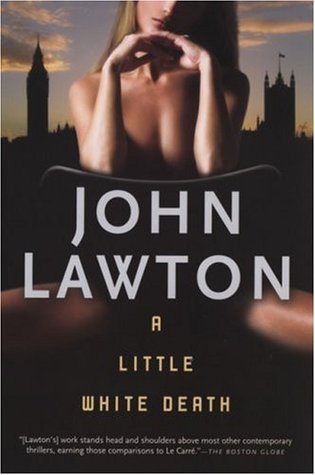
Review of A Little White Death by John Lawton (Grove Press, 2007)

1963. Frederick Troy has risen to be the Chief Detective of CID at Scotland Yard. His brother is shadow Home Secretary. Both move in elevated company and enjoy the legacy wealth and connections of their father’s media empire. And both have ties to brewing scandals as Britain transitions from conservative constraint to the swinging sixties – the unmasking and flight of a Soviet agent and a sex scandal involving, ministers, lords and a KGB agent. Troy, in particular, is neck deep in the trouble having been summoned by his friend, Charlie, to Beirut and following him on to Moscow, and being present at country house parties involving young women and special guests. As the Establishment closes ranks and puts the hedonistic doctor who ran the soirees on trial, Troy finds himself on long-term sick leave. He nonetheless follows the case and gets drawn into part of the conspiracy, and when two key actors are found dead he resumes his old career. The two victims supposedly died by their own hands, but Troy and his colleagues are not convinced, setting out to discover the killer’s identity, even if that means rocking the foundations of the state.

A Little White Death is the third book in the Inspector Troy series. While the first was set in 1944, near the start of Troy’s career, and the second in 1956, this outing takes place in 1963. Despite various career set-backs, Troy has risen to head of CID at Scotland Yard. He’s still as head-strong and reckless as ever, willing to take risks that others would think foolhardy. This includes continuing a friendship with a known Russian spy, even following him to Moscow, and attending retreats organized by a well-connected doctor where ministers, lords, and the head of KGB at the Soviet embassy party with young girls. With echoes of Kim Philby’s defection and the Profumo Affair, Lawton tells the tale of Troy’s entanglements with the various actors and his attempt to battle illness, police politics, and the Establishment to protect those being stitched-up in the aftermath of scandal and discover who murdered two key players. It’s an ambitious, sprawling story with a number of intersecting plot-lines, which Lawton weaves nicely together, and there is nice intertextual references to events and personalities of the time. As ever, his voice is a delight to read and there is plenty of interesting asides, intrigue, and twists and turns. Troy is an interesting lead with a devil-may-care attitude, though his actions when asked to protect his old boss’ granddaughter did feel somewhat out-of-character, and the other actors are well-penned. The tale only works if one suspends disbelief that Troy would be already personally embedded in all the various networks, with the power to pull strings with the Establishment and to lead an investigation he has a conflict of interest in running, but Lawton does a good job of executing those sleights of hand. The result is an engaging, thoughtful read about spies, sex, scandal and suicide in 1960s Britain.


Friday, August 25, 2017

Review of Riptide by John Lawton (Orion, 2001)

1941. Wolfgang Stahl, a senior Nazi and American spy has fled Berlin and made his way to London, going underground in the city. Stahl’s handler, Calvin Cormack has been flown in from Zurich, and paired up with special branch inspector, Walter Stilton, to track down the missing agent. Stahl’s old boss, Heydrich has also activated a couple of agents to deal with him before he can talk to the allies about Germany’s plans. Sergeant Troy of Scotland Yard’s murder squad takes an interest when the body of a supposed Dutchman is discovered, but is quickly moved to one side. Troy though likes resolution and when the killer strikes again and Cormack is in the frame for murder, the young policemen decides to set his own trap.

Riptide (released as 'Bluffing Mr Churchill' in the US) is the fourth book in the Inspector Troy series, though it is a prequel to the other books in the series, set in 1941 when Troy is a young, up-and-coming sergeant.  The plot centres on the hunt for a senior Nazi and American agent who has fled to London and is hiding in the city, unsure who to trust.  Trying to track him down are an American Army officer and special branch detective, with Troy on sidelines waiting to enter to save the day. This is typical Lawton fare, blending strong historicisation and sense of place with a ripping yarn peopled with interesting and engaging characters, ranging from everyday folk to senior diplomats and politicians to real-life players at the time. Cormack and Troy are at the core of the tale, but it is the Stilton family who steal the show. The result is a wonderfully evocative sense of London at war and a gripping tale of espionage, politics, murder and pathos (Lawton is not afraid to bump off some of his most endearing characters) that has a nice side line in dark humour and a lovely slapstick scene in a tailor’s shop.  I was gripped from the start and picked up the book every time I had a spare moment, thoroughly enjoying the read.

Monday, October 28, 2013

Review of Then We Take Berlin by John Lawton (Atlantic Monthly Press, 2013)

1941 and John Holderness’ mother is killed in the blitz.  With his father serving in the army he goes to live with his Granddad, Abner Riley, a safe-cracker, and his partner, Merle, an occasional prostitute.  Holderness is bright and an avid reader and as an apprentice to his grandfather discovers all the tricks to breaking and entering.  In Germany, as the Russians near Berlin, Nell Burkhardt is sent by her parents to her stay with her uncle.  As the American’s arrive she drifts to Bergen-Belson and using her gift for languages does her best to help those interned there.  Shortly after V-Day Holderness is drafted into the RAF.  His quick wit and insolence bring him to the attention of Lt. Colonel Burne-Jones of military intelligence and he’s packed off to Cambridge to learn German and Russian.  Holderness has a gift for words and appetite for learning about the world.  Once trained he’s shipped off to Hamburg to try and spot Nazis who have adopted new identities.  Then in 1947 he’s transferred to Berlin.  There he meets and falls in love with Nell and uses his criminal skills to become active in the black market, hooking up with a US Army captain and three British soldiers to sell knocked-off army supplies.  Their activities escalate when they start supplying a Russian NVKD major with goods, using a long forgotten tunnel beneath the city.  It’s a tunnel that Holderness will return to when he’s asked to extract an elderly woman from East Berlin in 1963.

The first third of Then We Take Berlin is a wonderful read.  John Lawton provides an engaging introduction to John Holderness early years growing up in East London during the war, that of Nell’s in the last days of the war in Germany, and Holderness’ recruitment into military intelligence.  The characterisation is keenly observed and there’s a strong sense of place and context.  In the middle third of the book the narrative starts to become more bitty with many short sections charting Holderness’ time in Hamburg and then Berlin as he becomes involved in the black market and starts a relationship with Nell.  The final third moves the story through the 1950s up to 1963 and Kennedy’s visit to Berlin, and Holderness’ attempt to extract someone from East Berlin.  Here, the narrative is a little sketchy, Nell largely disappears from view, and it’s really not clear what Holderness’ motivations are.  There is an odd and confusing timeline shift, with some scenes from 1955 inserted between the transition from 1948 to 1952 for no apparent reason, but the most disappointing aspect is the ending.  The story just stops.  It feels as if at least twenty odd pages are missing.  The novel as a whole reads as if Lawton wasn’t sure where to take it, or quite how to deal with the twenty year span of time.  This was a shame as the start was excellent and Holderness and Nell are attractive creations.  It’ll be interesting to see how Lawton develops the series.

Monday, June 18, 2012

Review of The Lily of the Field by John Lawton (Grove Press, 2011)


Vienna, 1934, and ten year old Meret Voytek, a talented young cellist, becomes a pupil of the concert pianist/cellist Viktor Rosen.  A Jew, Rosen has fled Germany after a stint in a camp, but the political climate in Austria is deteriorating and he knows that he’ll shortly have to move on.  1940 and Meret is playing in the Vienna Youth Orchestra, shorn of its Jewish players, and Rosen has been detained in London and interned on the Isle of Man, along with an assortment of other European émigrés, including Rod Troy and Karel Szabo, a Hungarian physicist.  Whilst some internees stay in Britain, others are sent overseas,  Szabo put on a boat to Canada.  A couple of months later he is recruited to work on the Manhattan Project.  1944 and Meret is in Auschwitz, trying to survive, playing in the women’s orchestra that greets new arrivals and waltzes them to the gas chambers.  Szabo is in Los Alamos, helping to build the atomic bomb and Rosen is delighting audiences at concerts.  1948 and a man is killed on a London Underground platform, shot in the back.  A man known to Rosen, who is now reunited with his protege, Meret.  Inspector Freddie Troy, brother to MP and government minister, Rod Troy, is put in charge of the case.  It doesn’t take him long to realise that there is more to the killing than it would first appear.  He’s been warned in no uncertain terms to stay away from anything involving spooks, but Freddie’s always had a problem following commands and it always drops him in hot water.

A Lily of the Field consists of two distinct parts.  The first part charts the various strands of Meret, Victor and Szabo from 1934 to 1948, putting in place the contextual back story.  The second covers Troy’s investigation into the underground station murder.  There’s a distinct contrast in styles between the two parts.  The first is light, quick, short scenes that provide insight into key moments and give good, strong pen pictures of the characters.  The writing is expressive and Lawton delivers an expansive story, covering a number of characters, places and times, in a relatively short amount of space.  The material is also historically rich, detailing key events over a 14 year period without it seeming as if things were skipped over or them dominating the narrative.  It is a really skilful and engaging piece of writing.  Really top-draw stuff.  The second half, the pace drops and the writing becomes a little more leaden, and characters from the first half all but disappear for extended passages.  At times, it is seems to become more about Troy and his family than the story.  It’s still very good, but it lacks the sparkle and dash of the first part.  Even so, the plotting is excellent and there is a satisfying resolution to the story.  Overall, a shame that the second half did not have the verve of the first, but nonetheless a well crafted and very enjoyable read that is a cut above normal fare.

Friday, February 26, 2010

Review of Old Flames by John Lawton (Orion, 1996)

1956 and Khrushchev is on a state visit to the Britain. Given his fluent Russian, Chief Inspector Troy is drafted into the special branch team to mind the Soviet President. During the visit a lone frogman is spotted trying to spy on the Russian battleship berthed in Portsmouth Harbour and a couple of weeks later a body is washed up, although his face and hands are in such poor condition he can’t be identified. Troy sets out to investigate who the frogman is, why he was spying on the ship, and why he was killed, despite warnings to stay away from the case. Soon he is caught in a web of intrigue, his life under-threat, with those that can help him being murdered as soon as he tracks them down. But Troy is a tenacious copper and he isn’t going to be stopped until he discovers the truth.

As I posted a couple of days ago, Lawton is a skilled writer and storyteller. His prose is easy on the eye, evocative, and hooks the reader in early and tugs them along. As a cold war thriller/crime novel, Old Flames works well. The characterisation is good and there is a strong sense of place and history. Where I have a difficulty as a reader is in respect to plausibility. The historical detail, the kinds of relationships between individuals and agencies, the political intrigue, and basics of the plot are all fine in this regard. Rather it is the many coincidences between characters that I find hard to buy. Every character is already known in some capacity to other characters, or has some tangible relationship to them. I noted a number of these in the previous post, but they continue all the way to the end of the novel, with even minor characters linked to Troy or others (for example, the bank at which one of the characters has an account just happens to be managed by a close school friend of Troy's who then provides him access, despite the fact that the character lives in a completely different town and there are hundreds of banks in the city). The story really didn’t need this level of interweaving and coincidence, and in many ways it works best when Troy is in territory where there are no such relationships. It’s not that I am against coincidence, but rather excessive coincidence. The story is also a little too long, padded out with some sidebars that could have been trimmed back. That said, I did enjoy Old Flames and will keep an eye out for other books by John Lawton.

Tuesday, February 23, 2010

Convenient relationships

I'm just over 200 pages into John Lawton's Old Flames. My sense so far is a very strong opening is entering a bit of a plodding middle, but I suspect it's going to reignite at any minute. Lawton is clearly a very good writer and can tell a good yarn. Like with Black Out though, I can't help but notice that coincidence and convenient relationships play more than a minor role in his stories. His main character, Troy, is a chief inspector in charge of the Scotland Yard murder squad, he is the son of a newspaper magnate Russian emigre for which his brother-in-law is an editor, his brother is the shadow foreign secretary, his ex-girlfriend is Eisenhower's ex-secretary, and he's been drafted in to the bodyguard detail of Khrushchev when he visits Britain, etc. That's a lot of convenient relationships. I can't help feeling that the story might gain something if parts of it didn't rest on them quite so much. I guess the other side of this, is that there are/were families who are incredibly successful and are tied into powerful networks (such as the Kennedys). I don't know, I just find some of the plot unlikely or implausible which always unsettles me as a reader. Still it makes for an intriguing story, and I'm firmly hooked in, so on that level it is working just fine!

Tuesday, September 1, 2009

The largest geopolitical project in living memory

Over the past year I've read a number of novels set either just before or during the second world war including books by Alan Furst, Philip Kerr, John Lawton, Marek Krajewski, Hans Fallada, Carlo Lucarelli and others, along with some straight history books, but I haven't been keeping track of history itself. Today marks the 70th anniversary of the start of the Second World War and Germany's invasion of Poland (The Polish Officer by Furst does a good job of capturing the first few days as Poland desperately tries to put in place the basis for resistance knowing that it is being over-run).

Of course, I haven't pre-prepared a post, but I have been thinking about doing one based on a conversation I had with Martin Dodge last week, so I'm hastily moving it forward. At his Mapping Manchester exhibition we were talking about whether the John Ryland's library had survived the blitz intact and that led onto a discussion about bomb census maps. Martin kindly sent me on a link to a story that discussed them. I'd be really interested to take a look at them in more detail. I always remember the two old ladies who lived next door when I was growing up who used to describe going up Caldy Hill to watch Liverpool and Birkenhead docks being bombed. They were great story-tellers - you felt like you were there watching the cities burn.

The tracing below is from the Christmas raids of Dec 20-22, 1940 on the Merseyside area when 365 people died. It is designed to be overlain on a base map, hence why there are so few roads, etc. shown (much cheaper to keep a clean map and have lots of tracings). A daily tracing would be taken so that the pattern of bombing could be tracked over time.


The tracing shows the area between Bootle and Walton and plots 26 separate incidents in quite a confined area. Each incident is given a number, followed by the size and type of bomb, and the location of any unexploded ordnance. Collectively the maps reveal that by the end of the war Liverpool was the second most bombed UK city after London.

These other maps are of Brighton and Bristol.


I've been fascinated by the Second World War for a while now given it was the largest and most complex geopolitical event in modern history with many civil wars operating inside transnational wars, and political ideology explicitly reshaping territory and lives through violence. I've been trying to collect books that explains what went on different parts of the world, including some that traditionally get looked over (e.g. Aleutian Islands [the only bit of the USA occupied by the Japanese], Malta, Isle of Man, Ireland, etc) so I can have a go at mentally stitching the whole lot together.

I'll perhaps try to do something on Irish neutrality tomorrow. Ireland declared its neutrality on the 2nd Sept, the day before Britain and France declared war. It was a policy that was rigidly maintained right to the end of the war.

Lest we forget ...

Saturday, August 29, 2009

Saturday Snippet: Black Out

John Lawton has a fine eye for capturing war torn London. In Black Out the year is 1944 and the blitz is still lingering on. I reviewed the book ten days or so ago and I thought I'd share a passage from the book that might wet your appetite.

At the foot of Eros's pedestal two young women sat in shirtsleeves, daring all for spring sun, and shared a single cigarette.

He walked into Piccadilly, watching his shadow dance before him. In the brightness of such light the city contrasted sharply with the weather. London thawed. London budded. London ached. Like a muscle stretched and strained for too long it yearned to relax. The sense of action, the sense of an ending being almost tangible. Troy found himself wondering if the city would not expire with the forst breath of spring like some old man who had spent his energy enduring the depth of winter and had none left for the simple pleasures of living. What the sun revealed was a city of peeling, blistered paint, of broken, boarded-up windows, of shattered walls and open roofs, of four long years of make do and mend. It was a city scorched and scarred, patched and tattered in the light of spring.


I was also taken by this line:

'Of course war's an utter fucking picnic! Millions getting slaughtered for the benefit of the nostalgia of the survivors.'

Given the plethora of novels, TV series, documentaries and Hollywood movies that focus on the second world war, it's difficult to not think of them as a perverse nostalgia industry built on a mountain of dead bodies (even if some of them help us to think through why it happened and shocking waste of life, rather than simply providing entertainment).

I've already ordered the second book in the series, Old Flames, which moves forward to 1956. If its written with the same prose and eye for place I'm sure to enjoy.

Thursday, August 20, 2009

Pre-order splurge

I've had an interesting journey trying to get The Rule Book into Irish bookshops; I've learnt a lot about the book publishing industry in the process. I won't bore you with the details but it seems that the impasse has been cleared (by me taking a cut in royalties so that the publisher and distributor both got what they wanted). I got two reports yesterday of sightings, one in the Dublin Airport, the other in the window of Hodges Figgis, the largest bookshop in Dublin. Hopefully the blumming thing will now find its way into reader's hands ...

Anyway, feeling chipper with myself I decided to splurge and pre-order some books. I very rarely do this, but there are a couple of authors and series I'm prepared put my hand in pocket for. So I've ordered the following, which when they are delivered will zip to the top of a to read pile that's already rickety.


Are there any authors or series that you feel compelled to buy the minute they're published (and forget the price)?


I can't wait to get stuck into these. If they all turn up on the same day I won't know where to start. I also know a couple of people who'll be pestering me for first dibs once I've finished. In fact I imagine they might get snaffled the moment I turn my back.

I also decided to buy two others. Old Flames is the second book in the Troy series, the first of which I reviewed yesterday. If Donna Moore's blog is anything to go by then Go To Helena Handbasket should be a blast. Expect reviews this side of Christmas! I know I'm not going to be able to stop myself, but I really don't need to buy any more books before then.


Flip-it - I've just read the order email from Amazon. Peter Temple is published 3rd Sept, Philip Kerr 10th Sept, and Terry Pratchett 1st Oct. I just followed the default settings which groups the delivery into as few as parcels as possible so the expected delivery date is 7th-13th Oct! I need to to keep a better eye on that next time. Grrrr.

Wednesday, August 19, 2009

Review of Black Out by John Lawton, Phoenix (1995)

London 1944, the tail end of the Blitz, and a human arm is discovered by children on a bomb site. The arm has been severed from its owner by a knife. The case is assigned to Detective Sergeant Troy, son of a Russian émigré turned newspaper magnate, and the rising star of the murder squad based in Scotland Yard. Troy soon establishes that Peter Wolinski, a Polish communist and intellectual, is missing from his apartment and starts a manhunt, only the victim appears to be German and there is no record as to his identity. Soon Troy is drawn into the world of wartime intelligence and is caught between two femme fatales – Tosca, a feisty New Yorker working for American High Command and Lady Diana Brack, the elegant lover of a shady American operative. Stonewalled by the intelligence services, when Troy refuses to give up the chase he becomes the hunted.

Black Out is one of a series of Troy novels that have been published out of chronological order. It’s the first one I’ve read and there was no sense that I needed to have read any of the others as the book stands alone. I found the first 100 pages or so a little frustrating. The story kind of ambled along and exploited a set of coincidences that I found very convenient and unlikely. For example (and revealing these will not spoil the read) – Wolinski, the man who disappears, lives in the apartment above Troy’s former mentor; Troy’s uncle, a university professor, also knows Wolinski; the woman who visits Wolinski’s apartment exits as Troy revisits his mentor; she is known to him as a family friend; Troy’s trusted constable also knows the woman as his brothers lust after her; the liaison between MI5 and the police attended the same school as Troy at the same time and is known to him; when Troy visits a RAF base he bumps into an old rival of his father. This is a big city, full of millions of people, and yet conveniently half a dozen principle characters are already known to each other and coincide in time and space. Perhaps one, maybe two, coincidences would have been realistic. But seven? And they were the ones I jotted down. In addition, Troy has remarkable luck – for example he’s the only survivor of a bomb explosion.

I almost stopped reading. I’m glad I didn’t as the story really picks up and the tension starts to mount and I ended up really enjoying the book. And there are some great twists towards the end. There was actually no need for these coincidences and the book would have worked equally well if the characters had been strangers. The characterisation is good throughout and I thought Kolankiewicz, the foulmouthed pathologist (‘fuck bloody off bastardpimpcopper’; ‘what the bollox you want, smartyarse’), and Tosca, the feisty New Yorker, were great creations. Lawton captures the atmosphere of black out London and the story eventually evolves into a convoluted and gripping tale.

Overall, despite a frustrating start, Black Out really grew on me, the latter half more than making up for the first, and I’ll keep an eye out for other Troy novels.

Thanks to Uriah Robinson at Crime Scraps for the recommendation. Another review can be found at It's a Crime