‘It’s about rhythm,’ Sally explained. ‘It’s like dancing. You have to work together; be going in the same direction at the same time.’
‘You’re saying Greg is a better dancer?’ Tom asked, not hiding his frustration.
‘I’m saying we’re more attuned. Take sex. With you it’s always like fighting. Different paces, positions, forces. Everything’s out of sync. With Greg …’
‘I don’t believe this! You’re leaving me for better sex?’
‘You’re not listening. I’m leaving you because we’re not compatible.’
‘We were compatible enough to get married!’
‘Yes, but now I realise you wanted to foxtrot, I want to tango.’
A drabble is a story of exactly 100 words.

Saturday, January 9, 2016

Friday, January 8, 2016
Review of To Steal Her Love by Matti Joensuu (EuroCrime, 2008; Finnish 1993)

To Steal Her Love is a police procedural set in Helsinki, though not a mystery in that the reader knows the culprit from the start. Indeed, Joensuu’s narrative is divided into two strands. The first charts the half-real, half-fantasist world of Tweety, a young man obsessed with beautiful women, but who is unable to approach them, instead breaking into their homes in the middle of the night to watch them sleep. When he’s not doing that he’s hiding from his domineering mother, working as a cobbler, or helping his brothers to rob banks. The second strand follows the home life and work of Detective Sergeant Timo Harjunpää of Helsinki’s violent crimes unit. Harjunpää is a stoic cop who grinds out results, and is torn between two women. Both strands are very nicely written and interwoven. Joensuu has an eye for characters and how they’re bound together in awkward relationships and conflicts, as well as the institutional politics and personal power games of the police (he was a serving police officer for many years). While the narrative seems to drift along and seems quite sedate, there’s actually an awful lot going on within the strands and subplots (some of which are not resolved). The result is a nicely written, layered tale that tells a compelling and engaging story.

Wednesday, January 6, 2016
Around the world in 2015
 I did a fair bit of travel in 2015, both literally and literary. I made physical journeys to England (7), Belgium (2), Germany (2), Scotland, Northern Ireland, Canada, Croatia, Switzerland, Germany, and the United States. Through fiction I travelled to 21 countries:
Australia
The Dunbar Case by Peter Corris ***
Brazil
Hotel Brasil by Frei Betto ****.5
Canada
Sign of the Cross by Anne Emery ***
Lunenburg by Keith Baker **.5
Buffalo Jump by Howard Shrier ***.5
Eygpt
Dogstar Rising by Parker Bilal ****
England
A Song from Dead Lips by William Shaw ****
In Bitter Chill by Sarah Ward ***.5
Princes Gate by Mark Ellis ***.5
Murder Must Advertise by Dorothy Sayers ***
Easy Streets by Bill James ***
The Detective Branch by Andrew Pepper ****
The Interrogator by Andrew Williams ***
The Sittaford Mystery by Agatha Christie ***.5
Vinnie Got Blown Away by Jeremy Cameron ****
The Hanging Valley by Peter Robinson ***.5
Blacklands by Belinda Bauer ***.5
A Dark Redemption by Stav Sherez ****
Angels Passing by Graham Hurley ****.5
The Nine Tailors by Dorothy L Sayers *****
Brighton Rock by Graham Greene ****
Red Joan by Jennie Rooney *****
The Yard by Alex Grecian ***
Enter a Murderer by Ngaio Marsh ***.5
France
Nazis in the Metro by Didier Daeninckx **.5
Germany
Stasi Child by David Young ****
Lehrter Station by David Downing ***.5
Werewolf by Matthew Pritchard ***.5Rosa by Jonathan Rabb ****.5
Iceland
Reykjavik Nights by Arnaldur Indridason ****
My Soul to Take by Yrsa Sigurðardóttir ***.5
Ireland
The Last Four Days of Paddy Buckley by Jeremy Massey ***
Unholy Ground by John Brady ****.5
Border Angels by Anthony Quinn ***.5
Little Girl Lost by Brian McGilloway ****Gun Street Girl by Adrian McKinty ****
The Dead Ground by Claire McGowan ****.5
Italy
The Few by Nadia Dalbuono ***
A Dark Song of Blood by Ben Pastor ***.5
Liberia
Bound by Secrecy by Vamba Sherif ***
Norway
Calling Out For You by Karin Fossum ****
Russia
The Winter Queen by Boris Akunin ***
Scotland
Strange Loyalties by William McIlvanney *****
Lennox by Craig Russell ****
Natural Causes by James Oswald ****
Blue Lightning by Ann Cleeves ****
Pandaemonium by Christopher Brookmyre ****
Red Bones by Ann Cleeves ***.5
South Africa
Let the Dead Lie by Malla Nunn ****
Sweden
The Laughing Policeman by Maj Sjowall and Per Wahloo *****
USA
The Getaway by Jim Thompson ***.5
The Music Lovers by Jonathan Valin ***
Strangers on a Train by Patricia Highsmith ***.5
Rough Riders by Charlie Stella ****.5
Bull Mountain by Brian Panowich ****.5
The Instant Enemy by Ross Macdonald ****.5
Concrete Angel by Patricia Abbott ****
The Long-Legged Fly by James Sallis *****
Black Bear by Aly Monroe ***.5
Mangrove Squeeze by Laurence Shames ****
The Exterminators by Bill Fitzhugh ****
Deadlock by Sara Paretsky ***
In The Wind by Barbara Fister ****.5
The Godwulf Manuscript by Robert B Parker ****.5
The Long Home by William Gay ***
Stone Cold by CJ Box ***
A Fine Dark Line by Joe Lansdale *****
Land of Dreams by Vidar Sundstol ****
Fool Moon by Jim Butcher ***
The Circle by Dave Eggers ***.5
California Thriller by Max Byrd ***
Five Little Rich Girls by Lawrence Block ***
The Informant by Andrew Rosenheim ****
The Day the Music Died by Ed Gorman ***
The Dutch Shoe Mystery by Ellery Queen ***
The Vanished by Bill Pronzini ****.5
Yugoslavia
The Pale House by Luke McCallin *****
More than one country
The Peripheral by William Gibson ***** (USA, England)
The Girl in Berlin by Elizabeth Wilson *** (England, Germany)
Royal Flash by George Fraser Macdonald ***.5 (England, Germany)
The Lady from Zagreb by Philip Kerr **** (Germany, Yugoslavia, Switzerland) Runaway by Peter May ***.5 (Scotland, England)The General Danced at Dawn by George Macdonald Fraser *** (India, Eygpt, Palenstine, Scotland)
Tuesday, January 5, 2016
Review of The Informers by Juan Gabriel Vásquez (2009, Bloomsbury)

The Informers is a reflexive novel that explores a little known period of Colombian history when many Germans living in the country were blacklisted and interned at the insistence of the United States and its subsequent effects. Using a plot device of a falling out between father and son over the publication of a biography of a family friend – a German Jew who fled to Colombia in the 1930s – Vásquez’s narrative charts three intertwined family histories: a Jewish German family who has fled from Nazi Germany to start a new life in Columbia; a German-Colombian family who is severely affected by internment; and a Colombian family who were initially friends of both German families. The father and son belong to the latter, with the son keen to understand the history of the families, while the father would prefer the past remains largely forgotten. While the story is interesting and at times nicely written, Vásquez’s style was not to my taste, with the storytelling being overly reflexive, often to the point of navel gazing, and the pace slowing to almost a standstill at times. My sense was that it could have done with a good edit and it would have been more engaging if it had included more personal interchanges (the dialogue between characters is by far the best bits in the telling). Overall: interesting for the history, but fairly hard work to wade through despite the often nice prose and philosophical observations.

Monday, January 4, 2016
Best reads of 2015
I read and reviewed 99 books in 2015. Here are my favourite fiction books read in 2015 (5 star reviews). For
full reviews of each book click on the links and to see all 99 reviews click here.
 The Laughing Policeman by Maj Sjowall and Per Wahloo
In my opinion The Laughing Policeman a masterclass in how to write a realist police procedural novel that does not rely on coincidence or plot devices to move the story along, nor does it concentrate on a non-conformist, lone cop (plus sidekick) who singlehandedly solves the case whilst coping with all kinds of personal issues. Instead, the case is solved through patient, diligent investigative work by a team of cops, involving a lot of footwork, collaboration, probing, leaning on informers, petty criminals and suspects, and wandering down blind alleys. The story is completely gripping as the dyspeptic Beck and his team inch towards solving the death of their colleague and eight other passengers shot late at night on a Stockholm bus.
 A Fine Dark Line by Joe Lansdale
A coming of age tale set over the summer of 1958 in town of Dewmont, East Texas. The voice is pitch perfect and Lansdale drops the reader into the world of an innocent thirteen year old boy living in a liberal family in a socially and racially divided society as he learns of the world’s various vices, some of its terrors, and how to survive them. The characterisation is excellent and there’s a clear sense of character development as the story unfolds. Where the tale really excels is the sense of place and time, and the plot. The result is a taut, tense mystery that is vividly told and keeps the reader engaged and guessing until the final page. I thought it was a wonderful, poignant and riveting read.
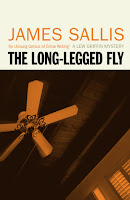 The Long-Legged Fly by James Sallis
A wonderfully emotive tale underpinned by strong character development and observational philosophy. Sallis’ narrative subtly explores race and gender in the Deep South, and reflects on the intricate webs of social and political relations and histories people are bound up in. Sallis revels in the question ‘what does this all mean?’, with Griffin looking for answers on the street and the bottom of a glass. The prose is a joy to read.
 Strange Loyalties by William McIlvanney
What separates McIlvanney’s crime fiction from most is, I think, its literary sensibilities. While his stories are very much of the crime genre and are dark and gritty tales, they are crafted with prose and are rich in philosophical reflection. In Strange Loyalties Laidlaw is trying to come to terms with the untimely death of his brother, picking away at questions that no-one wants answered except him. While it's not the most cheery of tales it is compelling and haunting with Laidlaw seeking a truth that he knows he does not want to know.
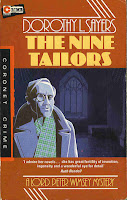 The Nine Tailors by Dorothy L Sayers
Sayers’ book rightly deserves plaudits for being a classic crime fiction tale, ticking all the key boxes - intriguing and clever plot, a thorny puzzle, excellent contextualisation, nice characterisation and interaction between characters, a strong sense of place, and literary prose. Essentially the tale is a whodunnit set in a small English village in the fens, centred on a Church and its bells, and the legacy of a robbery some twenty years previously. The plotting is intricate and well executed with minimal use of plot devices, and while the tale strays a little from social realism at times it nevertheless hangs together coherently and is rounded off with an ingenious but plausible denouement.
 Red Joan by Jennie Rooney
An engaging and thought provoking traitor’s tale, Red Joan tells the story of a woman recruited at university by the Soviets who went on to become a leading spy at an atomic research centre and her subsequent interrogation many years later. The narrative structure works very well, aided expressive prose, nicely crafted characterisation, and a carefully constructed plot. A particular strength of the story is how Rooney unsettles any straightforward black and white reading of being a traitor, providing a layered, nuanced and poignant account that gradually exposes a long held secret and its consequences, and explores themes of motive, ideology, conscience, guilt, regret, and protection.
 The Pale House by Luke McCallin
Set in the closing stages of the Second World War, McCallin has his German detective, Reinhardt, conduct a murder investigation in Sarajevo. He weaves a clever, compelling and somewhat complex plot, nicely capturing the fear at work in the city, the tension within the German ranks and between them and their Croatian collaborators. Reinhardt is a somewhat sombre character, but his principles and role as a flawed but ‘good German’ in a corrupt regime makes him an interesting anti-hero. I particularly liked the very strong sense of place and historical context. Overall, an excellent historical crime tale.
 The Peripheral by William Gibson
It’s easy to understand how some readers might get frustrated with William Gibson’s writing style. In The Peripheral he uses a raft of made-up slang and neologisms, new cultural norms and invented technologies without ever explaining them. He just plunges the reader into the narrative. The result however is worth the disorientation. The plot is ingenious and nicely constructed, with Gibson exploring the unfolding arc of history and the interplay of politics and technology, and speculating on the fate of humanity.
These books all received 4.5 stars and make-up the rest of my 'best of' list for 2015.
Hotel Brasil by Frei Betto
In The Wind by Barbara Fister
Angels Passing by Graham Hurley
The Instant Enemy by Ross Macdonald
The Dead Ground by Claire McGowan
Bull Mountain by Brian Panowich
The Godwulf Manuscript by Robert B Parker
Mort by Terry Pratchett
The Vanished by Bill Pronzini
Rosa by Jonathan Rabb
Rough Riders by Charlie Stella
Unholy Ground by John Brady

In my opinion The Laughing Policeman a masterclass in how to write a realist police procedural novel that does not rely on coincidence or plot devices to move the story along, nor does it concentrate on a non-conformist, lone cop (plus sidekick) who singlehandedly solves the case whilst coping with all kinds of personal issues. Instead, the case is solved through patient, diligent investigative work by a team of cops, involving a lot of footwork, collaboration, probing, leaning on informers, petty criminals and suspects, and wandering down blind alleys. The story is completely gripping as the dyspeptic Beck and his team inch towards solving the death of their colleague and eight other passengers shot late at night on a Stockholm bus.

A coming of age tale set over the summer of 1958 in town of Dewmont, East Texas. The voice is pitch perfect and Lansdale drops the reader into the world of an innocent thirteen year old boy living in a liberal family in a socially and racially divided society as he learns of the world’s various vices, some of its terrors, and how to survive them. The characterisation is excellent and there’s a clear sense of character development as the story unfolds. Where the tale really excels is the sense of place and time, and the plot. The result is a taut, tense mystery that is vividly told and keeps the reader engaged and guessing until the final page. I thought it was a wonderful, poignant and riveting read.

A wonderfully emotive tale underpinned by strong character development and observational philosophy. Sallis’ narrative subtly explores race and gender in the Deep South, and reflects on the intricate webs of social and political relations and histories people are bound up in. Sallis revels in the question ‘what does this all mean?’, with Griffin looking for answers on the street and the bottom of a glass. The prose is a joy to read.

What separates McIlvanney’s crime fiction from most is, I think, its literary sensibilities. While his stories are very much of the crime genre and are dark and gritty tales, they are crafted with prose and are rich in philosophical reflection. In Strange Loyalties Laidlaw is trying to come to terms with the untimely death of his brother, picking away at questions that no-one wants answered except him. While it's not the most cheery of tales it is compelling and haunting with Laidlaw seeking a truth that he knows he does not want to know.

Sayers’ book rightly deserves plaudits for being a classic crime fiction tale, ticking all the key boxes - intriguing and clever plot, a thorny puzzle, excellent contextualisation, nice characterisation and interaction between characters, a strong sense of place, and literary prose. Essentially the tale is a whodunnit set in a small English village in the fens, centred on a Church and its bells, and the legacy of a robbery some twenty years previously. The plotting is intricate and well executed with minimal use of plot devices, and while the tale strays a little from social realism at times it nevertheless hangs together coherently and is rounded off with an ingenious but plausible denouement.

An engaging and thought provoking traitor’s tale, Red Joan tells the story of a woman recruited at university by the Soviets who went on to become a leading spy at an atomic research centre and her subsequent interrogation many years later. The narrative structure works very well, aided expressive prose, nicely crafted characterisation, and a carefully constructed plot. A particular strength of the story is how Rooney unsettles any straightforward black and white reading of being a traitor, providing a layered, nuanced and poignant account that gradually exposes a long held secret and its consequences, and explores themes of motive, ideology, conscience, guilt, regret, and protection.

Set in the closing stages of the Second World War, McCallin has his German detective, Reinhardt, conduct a murder investigation in Sarajevo. He weaves a clever, compelling and somewhat complex plot, nicely capturing the fear at work in the city, the tension within the German ranks and between them and their Croatian collaborators. Reinhardt is a somewhat sombre character, but his principles and role as a flawed but ‘good German’ in a corrupt regime makes him an interesting anti-hero. I particularly liked the very strong sense of place and historical context. Overall, an excellent historical crime tale.

It’s easy to understand how some readers might get frustrated with William Gibson’s writing style. In The Peripheral he uses a raft of made-up slang and neologisms, new cultural norms and invented technologies without ever explaining them. He just plunges the reader into the narrative. The result however is worth the disorientation. The plot is ingenious and nicely constructed, with Gibson exploring the unfolding arc of history and the interplay of politics and technology, and speculating on the fate of humanity.
These books all received 4.5 stars and make-up the rest of my 'best of' list for 2015.
Hotel Brasil by Frei Betto
In The Wind by Barbara Fister
Angels Passing by Graham Hurley
The Instant Enemy by Ross Macdonald
The Dead Ground by Claire McGowan
Bull Mountain by Brian Panowich
The Godwulf Manuscript by Robert B Parker
Mort by Terry Pratchett
The Vanished by Bill Pronzini
Rosa by Jonathan Rabb
Rough Riders by Charlie Stella
Unholy Ground by John Brady
Sunday, January 3, 2016
Lazy Sunday Service
I've spent a chunk of the seasonal break revising the latest novel in
progress. I did some fairly major surgery based on a couple of very
useful readers' reports, removing 11,500 words, adding 5,500 and revising another chunk. The edits have certainly improved the story
and I think it's in a pretty reasonable form. I guess the next step is
to start hawking it around. I know exactly what I'm doing at this stage for non-fiction work, but how the fiction side of publishing works is still a bit of mystery to me. Wish me luck - I have a feeling that's a vital part of it!
My posts this week
I was nine when I killed for the first time
December reviews
Review of The Getaway by Jim Thompson
Review of Reykjavik Nights by Arnaldur Indridason
Review of The Music Lovers by Jonathan Valin
Review of Strangers on a Train by Patricia Highsmith
My posts this week
I was nine when I killed for the first time
December reviews
Review of The Getaway by Jim Thompson
Review of Reykjavik Nights by Arnaldur Indridason
Review of The Music Lovers by Jonathan Valin
Review of Strangers on a Train by Patricia Highsmith
Saturday, January 2, 2016
I was nine when I killed for the first time
I was nine when I killed for the first time. I stabbed a man in the chest with a kitchen knife while he slept. An hour earlier he’d beaten my mother unconscious. I made a full confession, but my mother made a counter-one and was convicted. I was sent to my grandparents. Fifteen months later my grandfather died of asphyxiation. It seems that a belt can be used for more than whipping young boys. I then disappeared into the night. The third man I killed thought he could sell my body to a rich man. I’ve killed five times since.
A drabble is a story of exactly 100 words.
A drabble is a story of exactly 100 words.
Friday, January 1, 2016
December reviews

The Getaway by Jim Thompson ***.5
Reykjavik Nights by Arnaldur Indridason ****
The Music Lovers by Jonathan Valin ***
Strangers on a Train by Patricia Highsmith ***.5
Rough Riders by Charlie Stella ****.5
Strange Loyalties by William McIlvanney *****
A Song from Dead Lips by William Shaw ****
The Killing of Polly Carter by Robert Thorogood ***
Bull Mountain by Brian Panowich ****.5
Lennox by Craig Russell ****
Future Crimes by Marc Goodman ***.5
The Instant Enemy by Ross Macdonald ****.5
Thursday, December 31, 2015
Review of The Getaway by Jim Thompson (1958, Orion)

The Getaway is considered a classic heist novel and has been adapted for the big screen a couple of times. The premise is straightforward. A gang of four criminals successfully heist a bank then immediately fall out and set upon each other. One is left dead before they have even left the bank. Doc McCoy, the gang mastermind, and Rudy fight and separate not far out of town. McCoy and his wife, Carol, take flight, but her lack of experience and Rudy’s murderous pursuit soon derails their plans. Moreover, despite their continued devotion, a seed of doubt and suspicion has been planted in the mind of each. Thompson keeps the pace high, with plenty of action and twists, while also exploring the evolving relationship between Doc and Carol. The result is an engaging and tense read that delivers both the spills and thrills of a heist and chase and the psychopathology of those involved. The weak spot, however, is the ending which swivels ninety degrees into an entirely different register. It might be literary and allegorical, but felt entirely out of place.

Wednesday, December 30, 2015
Review of Reykjavik Nights by Arnaldur Indridason (Harvill Secker, 2014)

Reykjavik Nights is a prequel to the popular Inspector Erlendur stories, set not long after he starts to work for the police. Already obsessed with missing persons or the lives of those that drop out of ordinary society, he is drawn to the cases of a homeless man found drown and a local woman who has vanished. Despite having no mandate to investigate either case, Erlendur patiently seeks answers. Given his lack of experience he is somewhat naïve and hesitant, feeling his way by instinct. As with the other books in the series, Reykjavik Nights is as much about Erlendur and Icelandic society as it is the cases. Indeed, the cases are quite mundane and straightforward but what makes them interesting is Erlendur’s attempt to tackle them. Oddly, that in itself is quite mundane with few tension points, but Indridason somehow makes its engaging. I think this is do with an evenly paced plot and the cadence of the prose – one is soon caught in a steady moving stream with pleasant scenery, with a few eddies but no rapids or waterfalls. The result is an enjoyable police procedural with an inevitable but satisfying conclusion.

Tuesday, December 29, 2015
Review of The Music Lovers by Jonathan Valin (1993, Dell)

The Music Lovers is a private investigator tale in the classic American tradition. Harry Stoner is hired to recover some valuable records by an odd couple – a rather weedy, unattractive college lecturer and his bombshell wife, a former band singer. What seems like it might be a routine case quickly becomes something much more murky and dangerous. Using his wiles and tough guy act, Stoner has to solve the puzzle and do battle with a bad guy. It all feels a bit ‘colour by numbers’ but Valin plays the trope well providing a breezy and entertaining narrative and populating the tale with a mix of engaging characters. The result is tale that is enjoyable but lacking substance and edge.

Monday, December 28, 2015
Review of Strangers on a Train by Patricia Highsmith (1950, Penguin)

Strangers on a Train was Patricia Highsmith’s first novel. At its heart is a simple but effective premise – if two strangers swap murders they can potentially commit the perfect crime. To give the tale a twist, she makes one of the strangers very keen to ensure the Faustian bargain is struck and the other a very reluctant participant. And while one has something to gain, the other has a lot to lose. Highsmith neatly manoeuvres the pieces into place, binding the two strangers together, and then ratchets up the psychological tension first with respect to the murders, then the fear of being discovered and the fear of each other as their lives become ever more entwined. It’s a nicely put together tale, though some of the plot devices are quite weak, such as Guy giving up an important commission. My main issue, however, was the characterization. Charles is somewhat one-dimensional and Guy just seems to act as a foil for Charles and the plot. Nonetheless it has an interesting hook, is an engaging story, and it’s obvious why it appealed to Hitchcock for a movie adaptation.

Sunday, December 27, 2015
Lazy Sunday Service
I hope you had an enjoyable Christmas. In between playing with the dogs in the lashing rain and sleet, eating, reading and watching TV, I spent a chunk of the week making revisions to the current work-in-progress. It's slowly taking on a new and better shape.
My posts this week
Review of Rough Riders by Charlie Stella
Review of Strange Loyalties by William McIlvanney
This is from Santa?
My posts this week
Review of Rough Riders by Charlie Stella
Review of Strange Loyalties by William McIlvanney
This is from Santa?
Saturday, December 26, 2015
This is from Santa?
Frankie tore the wrapping paper and stared at the doll. ‘This is from Santa?’
‘Where the hell did you get the presents, Tom?’ Jane asked.
‘The elves must have made a mistake,’ Tom said to his son. ‘I bet there’s a girl a block over opening a transformer.’
‘More like opening nothing at all,’ Jane muttered. ‘Jesus, you stole a kid’s Christmas present.’
‘How was I to know it was friggin’ doll?’
‘You’re missing the point. You left some poor kid without presents.’
‘I guess you don’t want yours, huh?’
‘I want you to take them back, you callous bastard.’
A drabble is a story of exactly 100 words.
‘Where the hell did you get the presents, Tom?’ Jane asked.
‘The elves must have made a mistake,’ Tom said to his son. ‘I bet there’s a girl a block over opening a transformer.’
‘More like opening nothing at all,’ Jane muttered. ‘Jesus, you stole a kid’s Christmas present.’
‘How was I to know it was friggin’ doll?’
‘You’re missing the point. You left some poor kid without presents.’
‘I guess you don’t want yours, huh?’
‘I want you to take them back, you callous bastard.’
A drabble is a story of exactly 100 words.
Wednesday, December 23, 2015
Review of Rough Riders by Charlie Stella (Stark House, 2012)
 James Singleton, living as Washington Stewart, has spent ten years in the FBI witness protection program in North Dakota. He’s still involved in crime, though now he has the Feds to protect his back. Wanting a new life free of his shackles he’s finally found a payday big enough to skip the country – a haul of heroin smuggled into the country through a local air force base. In exchange for murdering the cheating wife of a crooked colonel and selling the heroin he’ll get a free air ride and half the profits. Before he departs, however, he wants to tie up a few lose ends, including arranging the death of Eddie Senta, the man responsible for his disfigured face. The hit goes wrong and another of Singleton’s old enemies, former NYPD Detective Alex Pavlik, is soon on his trail. The police are also becoming concerned at the spike in the local murder rate. Singleton remains unphased, knowing that the Feds will keep protecting him and delighting in dishing out his own version of rough justice.
One of the back cover blurbs describes Stella’s writing as a mix of Elmore Leonard and George V Higgins. It’s a high compliment, and though not unwarranted, I think does Stella a bit of a disservice for he has a style all of his own: multiple intersecting narratives, a couple of dozen lead characters, tightly written prose and crisp, punchy dialogue, plenty of action, and a plot that rattles along like a runaway train. It’s fair to say that there is a heck of a lot going on in the 250 pages of Rough Riders. It’s a testimony to Stella’s writing that despite the somewhat convoluted plot that the whole thing hangs together well and that I never got lost across the various narratives and characters. Indeed, where the story excels is with respect to the characters and their interchanges. Stella populates the story with a whole variety of low-level criminals, cops, and civilians, each one vividly portrayed. My only critique really is that it was a little too condensed; kind of like a six part series crammed into a movie format. And while I sometimes conclude reviews by saying the book would make a good film, this one would make a terrific TV serial.

Subscribe to:
Posts (Atom)